
About Chihuahuas
About The Breed - Chihuahua
The Chihuahua’s history is puzzling and there are many theories surrounding the origin of the breed. Both folklore and archeological finds show that the breed originated in Mexico. The most common theory and most likely is that Chihuahuas are descended from the Techichi, a companion dog favored by the Toltec civilization in Mexico; however, no records of the Techichi are available prior to the 9th century. It is probable that earlier ancestors were present prior to the Mayans as dogs approximating the Chihuahua are found in materials from the Pyramids of Cholula, predating 1530 and in the ruins of Chichen Itza on the Yucatán Peninsula.
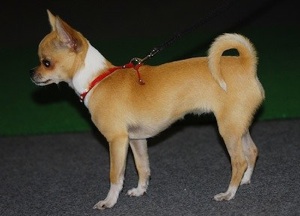
Some historians believe that the Chihuahua came from the island of Malta in the Mediterranean. More evidence for this theory lies in European paintings of small dogs that resemble the Chihuahua. One of the most famous paintings is a fresco in the Sistine Chapel by Sandro Botticelli dated 1480–1482. The fresco, depicting the Trials of Moses, shows a boy holding a tiny dog with round head, large eyes, big ears, and other characteristics similar to those of the Chihuahua.The painting was finished ten years before Columbus returned from the New World. It would have been impossible for Botticelli to have seen a Mexican dog, yet he depicted an animal strikingly similar to a Chihuahua.
TEMPERAMENT
A Chihuahua must be chosen with care, as the temperament of its owner can make a difference in the temperament of the pup. Ill tempered Chihuahuas can be easily provoked to attack, and are therefore generally unsuitable for homes with small children. The breed tends to be fiercely loyal to one particular owner and in some cases may become over protective of the person, especially around other people or animals. They do not always get along with other breeds, and tend to have a “clannish” nature, often preferring the companionship of other Chihuahuas over other dogs, These traits generally make them unsuitable for households with children that are not patient and calm. Chihuahuas love their dens and will often burrow themselves in pillows, clothes hampers, and blankets. They are often found under the covers or at the bottom of the bed, deep in the dark and safety of what they believe is their den.
There is Room for One More
- Airedale Terrier
- BAJA TERRIER
- Bedlington Terrier
- Border Terrier
- Brazilian Terrier
- Fox Terrier (Smooth)
- Fox Terrier (Wire)
- Glen of Imaal Terrier
- Irish Terrier
- Jagdterrier
- Kerry Blue Terrier
- Lakeland Terrier
- Manchester Terrier
- Parson Russell Terrier
- Soft-Coated Wheaten Terrier
- Welsh Terrier
- Small-sized Terriers
- Australian Terrier
- Cairn Terrier
- Cesky Terrier
- Dandie Dinmont Terrier
- Jack Russell Terrier
- Japanese Terrier
- Norfolk Terrier
- Norwich Terrier
- Norwich Terrier
- Scottish Terrier
- Sealyham Terrier
- Skye Terrier
- West Highland White Terrier
- American Staffordshire Terrier
- Bull Terrier
- Bull Terrier (Miniature)
- Staffordshire Bull Terrier
- Australian Silky Terrier
- English Toy Terrier (Black and Tan)
- Yorkshire Terrier
- American Hairless Terrier
- American Pit Bull Terrier
- Black Russian Terrier
- Boston Terrier
- Dutch Smoushond
- Miniature Fox Terrier
- Old English Terrier
- Patterdale Terrier
- Plummer Terrier
- Rat Terrier
- Ratonero Bodeguero Andaluz
- Russkiy Toy
- Sporting Lucas Terrier
- Teddy Roosevelt Terrier
- Tenterfield Terrier
- Tibetan Terrier
- Toy Fox Terrier
- Toy Manchester Terrier